
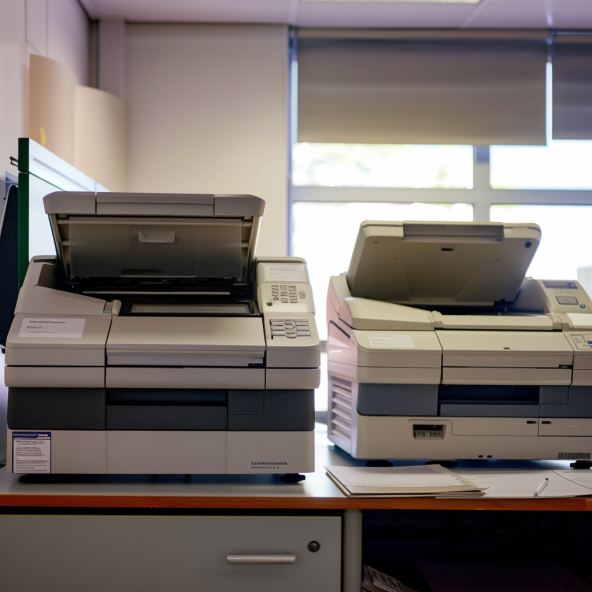
Digital vs. Analog Copiers: Which One Is Right for Your Business?
When it comes to choosing a copier for your office or business, one of the most common debates is whether to go for a digital copier or an analog copier. Both types have their pros and cons, and the right choice for you depends on factors such as your business needs, budget, and the volume of printing required. In this article, we’ll dive into the key differences between digital and analog copiers, helping you make an informed decision.
What is an Analog Copier?
Analog copiers, also known as traditional or "copy machine" types, operate based on electrostatic charges. The copying process is mechanical and entirely reliant on the use of light and mirrors to reproduce documents. When you place a document on an analog copier, the machine uses light to scan the original, and the image is transferred onto paper via a drum unit and toner.
These machines are designed for simple, straightforward copying tasks and were widely used in offices before the rise of digital technology. However, as businesses demand more advanced features, the popularity of analog copiers has decreased in favor of digital models.
What is a Digital Copier?
Digital copiers, on the other hand, use advanced digital technology to scan and reproduce documents. They rely on electronic sensors to capture the original document’s content and convert it into a digital image. This digital image is then transferred to a copier drum and printed on paper. Digital copiers can also store data, making it possible to edit, store, and retrieve documents directly from the machine.
Digital copiers offer several features that make them more versatile than analog copiers, including the ability to print, scan, fax, and even send documents to email or cloud storage. They also tend to have a higher resolution, better print quality, and more advanced features.
Key Differences Between Digital and Analog Copiers
1. Technology
The most significant difference between digital and analog copiers is the technology they use. Analog copiers rely on mechanical and optical systems, while digital copiers leverage digital imaging technology, which allows for higher precision and flexibility in copying and printing.
Digital copiers also offer faster processing speeds and improved quality, particularly for color copying and high-resolution images. Analog copiers, by comparison, are typically slower and produce lower-quality results, especially when handling detailed or complex documents.
2. Print Quality
One of the most obvious advantages of digital copiers is their print quality. Because digital copiers can adjust and improve image clarity digitally, they produce crisper, more detailed copies, particularly for color printing. Analog copiers, however, may struggle with complex images, and their output often lacks the precision that digital systems can provide.
3. Speed and Efficiency
Digital copiers tend to be faster than analog copiers. Digital models can process large volumes of copies much more quickly due to their high-tech design. Additionally, digital copiers can handle multiple tasks simultaneously—such as printing and scanning—without compromising performance. Analog copiers, in contrast, tend to be slower and are less efficient when it comes to high-volume tasks.
4. Features
Digital copiers come with a range of features that set them apart from their analog counterparts. For instance, digital copiers can scan and store documents, integrate with cloud storage, and allow for remote printing and scanning. Some even have touch screens, making them easier to operate.
Analog copiers, on the other hand, are typically limited to basic copying functions and do not have the flexibility or advanced features of digital models.
5. Cost
Generally speaking, digital copiers tend to be more expensive upfront compared to analog models due to their advanced technology and additional features. However, they often provide better long-term value, especially for businesses that require high-volume or high-quality copying.
Analog copiers, while more affordable initially, may become more expensive over time in terms of maintenance and repair, especially if you need to replace parts frequently. Additionally, analog copiers lack the versatility of digital models, which may make them less efficient for businesses with diverse copying needs.
6. Maintenance and Repairs
Digital copiers are typically easier to maintain and repair than analog copiers. Since they are based on digital technology, they have fewer moving parts and are less prone to wear and tear. Many digital copiers also come with built-in diagnostic tools, which can help identify issues before they become significant problems.
Analog copiers, by contrast, have more mechanical components that can wear out over time, leading to more frequent repairs and replacements. Maintenance costs for analog copiers can also add up, making them less cost-effective in the long run.
7. Energy Efficiency
Digital copiers tend to be more energy-efficient compared to their analog counterparts. They consume less power, especially when idle, and can offer features like automatic power-off and energy-saving modes. Analog copiers, on the other hand, may require more power to operate, even when not in use.
Which Copier Is Right for Your Business?
The decision to choose between a digital or analog copier largely depends on the needs of your business. If you require high-volume printing, advanced features like scanning and emailing, or need high-quality prints, a digital copier is likely the better option.
On the other hand, if your copying needs are minimal and you’re operating on a tight budget, an analog copier might suffice. However, keep in mind that you might end up paying more in the long run due to higher maintenance costs and the lack of versatility.
Common Copier Issues and Solutions
Regardless of whether you choose a digital or analog copier, you may encounter common issues such as downtime, malfunctions, or toner problems. It's important to know how to handle these issues efficiently to keep your operations running smoothly.
For instance, dealing with printer malfunctions can be frustrating, but understanding basic troubleshooting steps can help prevent extended downtime. Common problems like ink and toner issues are often fixable by following the manufacturer's guidelines or contacting professional repair services. You can find more tips and solutions for copier issues on Marga Enterprises’ Maintenance Issues and Solutions in Printer Rentals.
FAQs about Digital vs. Analog Copiers
What are the primary differences between digital and analog copiers?
- digital vs. analog copiers utilize advanced digital imaging technology to reproduce documents, offering a wide range of functionalities such as copier lease, printing, and faxing. These machines create digital copies of documents, which can be stored, edited, and transmitted electronically. In contrast, analog copiers rely on traditional photographic processes involving mirrors, lenses, and light exposure to create physical copies of documents. While analog copiers have a simpler mechanical design, digital copiers offer greater versatility and integration with modern office environments.
What are the advantages of digital copiers over analog copiers?
- digital vs. analog copiers offer several advantages over their analog counterparts, including:
- Enhanced functionality: Digital copiers can perform multiple tasks beyond copying, such as scanning, printing, and faxing, making them versatile office tools.
- Superior image quality: digital vs. analog copiers produce high-quality copies with precise detail and clarity, thanks to advanced digital imaging technology.
- Efficiency: Digital copiers are faster and more efficient than analog copiers, with higher copying speeds and greater automation capabilities.
- Connectivity: digital vs. analog copiers seamlessly integrate with digital workflows, supporting features such as wireless networking, cloud storage, and mobile printing.
- Document management: digital vs. analog copiers facilitate electronic document management, allowing users to store, retrieve, and share documents electronically.
- digital vs. analog copiers offer several advantages over their analog counterparts, including:
Are digital copiers more expensive than analog copiers?
- While digital vs. analog copiers may have a higher initial purchase price compared to analog copiers, they often offer lower long-term costs and greater value for businesses. Digital copiers require less maintenance and consumables, resulting in lower operating expenses over time. Additionally, the advanced features and capabilities of digital vs. analog copiers can improve productivity and efficiency, providing a significant return on investment for businesses.
Do digital copiers require specialized training for operation?
- While digital copiers may have more features and functionalities than analog copiers, many modern models are designed with user-friendly interfaces and intuitive controls. While some training may be necessary to fully utilize advanced features, such as scanning and document management, most users can quickly learn to operate digital copiers with minimal training. Many manufacturers offer training programs and support resources to help businesses maximize the benefits of digital copier technology.
Can analog copiers be upgraded to digital technology?
- In some cases, it may be possible to upgrade analog copiers to incorporate digital technology. However, the feasibility of such upgrades depends on the specific model and manufacturer of the copier. Upgrading digital vs. analog copiers to digital technology may require hardware modifications, software updates, and additional components, which can be costly and complex. Businesses considering upgrading from analog to digital copiers should consult with experienced vendors to assess their options and determine the most cost-effective solution for their needs.
Are digital copiers more environmentally friendly than analog copiers?
- Digital copiers typically consume less energy and produce fewer emissions compared to analog copiers. Additionally, digital copiers offer features such as duplex printing and electronic document management, which can help reduce paper consumption and minimize environmental impact. By adopting digital copiers, businesses can contribute to sustainability efforts while improving operational efficiency and reducing waste.
Can digital copiers handle high-volume document processing?
- Yes, digital copiers are well-suited for high-volume document processing due to their advanced capabilities and efficiency. Many digital vs. analog copiersoffer features such as automatic document feeders, duplex printing, and high-speed printing, allowing them to handle large volumes of documents quickly and effectively. Businesses with significant document processing needs can benefit from the speed, reliability, and scalability of digital copiers.
Do digital copiers require regular maintenance?
- Like any electronic device, digital copiers may require regular maintenance to ensure optimal performance and reliability. However, digital copiers typically have lower maintenance requirements compared to analog copiers, as they involve fewer mechanical components. Routine maintenance tasks may include cleaning, software updates, and replacing consumables such as toner cartridges and imaging drums. Many manufacturers offer maintenance contracts and support services to help businesses keep their digital copiers operating smoothly.
Can digital copiers integrate with existing office software and systems?
- Yes, digital copiers are designed to integrate seamlessly with existing office software and systems, allowing for efficient workflow automation and document management. Many digital copiers support standard protocols such as LDAP, SMB, and FTP, enabling easy integration with networked devices, servers, and cloud-based services. Additionally, many manufacturers offer software development kits (SDKs) and application programming interfaces (APIs) that allow businesses to develop custom integrations and workflows tailored to their specific needs.
Which type of copier is best suited for my business?
- The choice between digital and analog copiers depends on various factors, including your business's specific needs, budget, and operational requirements. While analog copiers offer simplicity and reliability, digital copiers provide advanced functionalities and efficiency. Businesses should assess their priorities and objectives to determine which type of copier aligns best with their goals and positions them for success in their respective industries. Consulting with experienced vendors and conducting thorough evaluations can help businesses make informed decisions and select the copier technology that best meets their needs.
Conclusion
In the debate of Digital vs. Analog Copiers, it’s clear that digital copiers offer greater flexibility, speed, and quality, making them the ideal choice for most modern businesses. While analog copiers can still serve basic copying needs, they are becoming increasingly obsolete as businesses demand more advanced features.
To learn more about copier rentals and how Marga Enterprises can support your green initiatives, contact us today at 09171642540 or 09614481276. You can also reach us via email at marga.enterprises2013@gmail.com. Let’s work together to build a greener, more sustainable future for generations to come. Visit Marga Enterprises and find out why we are the No. 1 Copier & Printer Rental Provider in the Philippines.
Join our growing community on Facebook and Youtube for exclusive content and discussions designed to propel your business forward. Stay updated on our posts and be part of the conversation!