
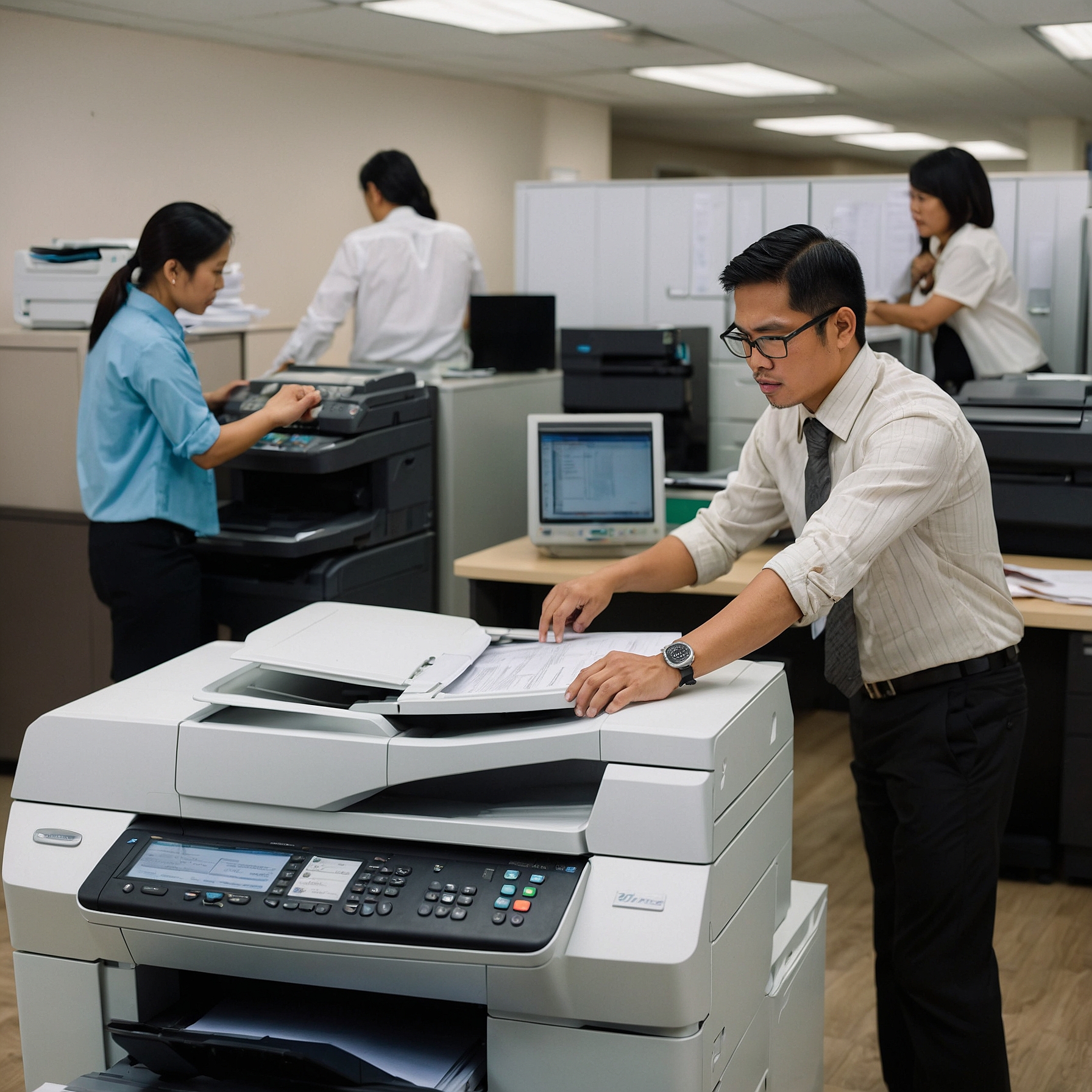
In today’s business environment, copiers remain essential tools for day-to-day operations. Whether you're running a small office, a school, or a large corporate department, choosing the right copier can significantly impact productivity and cost-efficiency. This overview of digital and analog copiers will help you understand the fundamental differences between these two technologies and how to determine which one suits your needs.
Let’s explore how digital and analog copiers work, compare their features, and highlight key considerations in terms of quality, cost, and functionality.
What Are Analog and Digital Copiers?
Before we dive into comparisons, it’s important to define each type:
Analog Copiers: These traditional machines use optical and mechanical processes to duplicate documents. They work much like a camera—projecting light onto a drum that transfers the image onto paper.
Digital Copiers: These use scanning and printing technology. The original document is scanned into a digital format and then printed using laser or inkjet technology.
For a deeper dive, check out this Overview of Digital and Analog Copiers.
Key Differences Between Digital and Analog Copiers
| Feature | Analog Copiers | Digital Copiers |
|---|---|---|
| Image Processing | Optical projection | Digital scanning |
| Output | Black & white | Black & white or full-color |
| Functionality | Copy only | Copy, print, scan, fax (multi-function) |
| Speed and Quality | Moderate | Faster with higher resolution |
| Connectivity | Standalone | Network-enabled, Wi-Fi, cloud support |
Benefits of Digital Copiers
Digital copiers are becoming the standard in most offices, and it’s easy to see why:
Multi-function capabilities: Most digital copiers can scan, fax, email, and print in addition to copying.
Better image quality: High-resolution output is ideal for detailed graphics or text.
Integration: Easily connect with office networks, cloud storage, and mobile devices.
Energy efficiency: Many models feature eco-friendly modes and reduced power consumption.
Learn more about the Benefits of Digital Copiers.
Why Some Still Prefer Analog Copiers
While digital copiers dominate the market, analog copiers still have niche advantages, especially in simple-use environments:
Lower initial cost: Analog copiers are usually cheaper upfront.
Simplified mechanics: Fewer electronic parts mean less risk of software failure.
Ease of use: Basic functionality makes them ideal for environments where high-tech isn’t necessary.
Visit Benefits of Analog Copiers to explore more scenarios where analog still works best.
Comparing Print Quality: Digital vs Analog
When it comes to output, quality matters—especially for presentations, marketing materials, or official documents.
Analog: Output is consistent but lacks the resolution needed for modern graphics.
Digital: Offers crisp, high-resolution printing with vivid colors and sharp text.
To see how they stack up in real-world performance, read Comparing Print Quality: Digital vs Analog.
Cost Considerations
Cost plays a major role in decision-making, and it’s not just about the sticker price. Consider:
Maintenance: Digital copiers may require software updates and support, while analog machines need regular drum or toner replacements.
Usage volume: High-volume operations may benefit from the speed and efficiency of digital systems.
Energy usage: Digital models often include energy-saving certifications, leading to lower utility bills over time.
For detailed breakdowns, visit Cost Comparison: Digital vs Analog Copiers.
Which One Is Right for You?
Here’s a quick guide to help you decide:
| Scenario | Recommended Copier Type |
|---|---|
| Small office with limited usage | Analog |
| School needing basic copy functions | Analog |
| Fast-paced office needing scanning/email | Digital |
| Businesses with remote work setup | Digital with cloud printing |
| Marketing teams needing high-res output | Digital with color printing |
Final Thoughts
This overview of digital and analog copiers shows that each type has its place depending on your needs, budget, and work environment. Digital copiers offer more features and integration, while analog copiers remain a reliable, low-cost option for basic tasks.
By understanding their differences, you can make a smarter investment that fits your workflow.
For expert help in choosing the right copier or setting up a rental, explore the full guide at Overview of Digital and Analog Copiers – Marga Copier.