
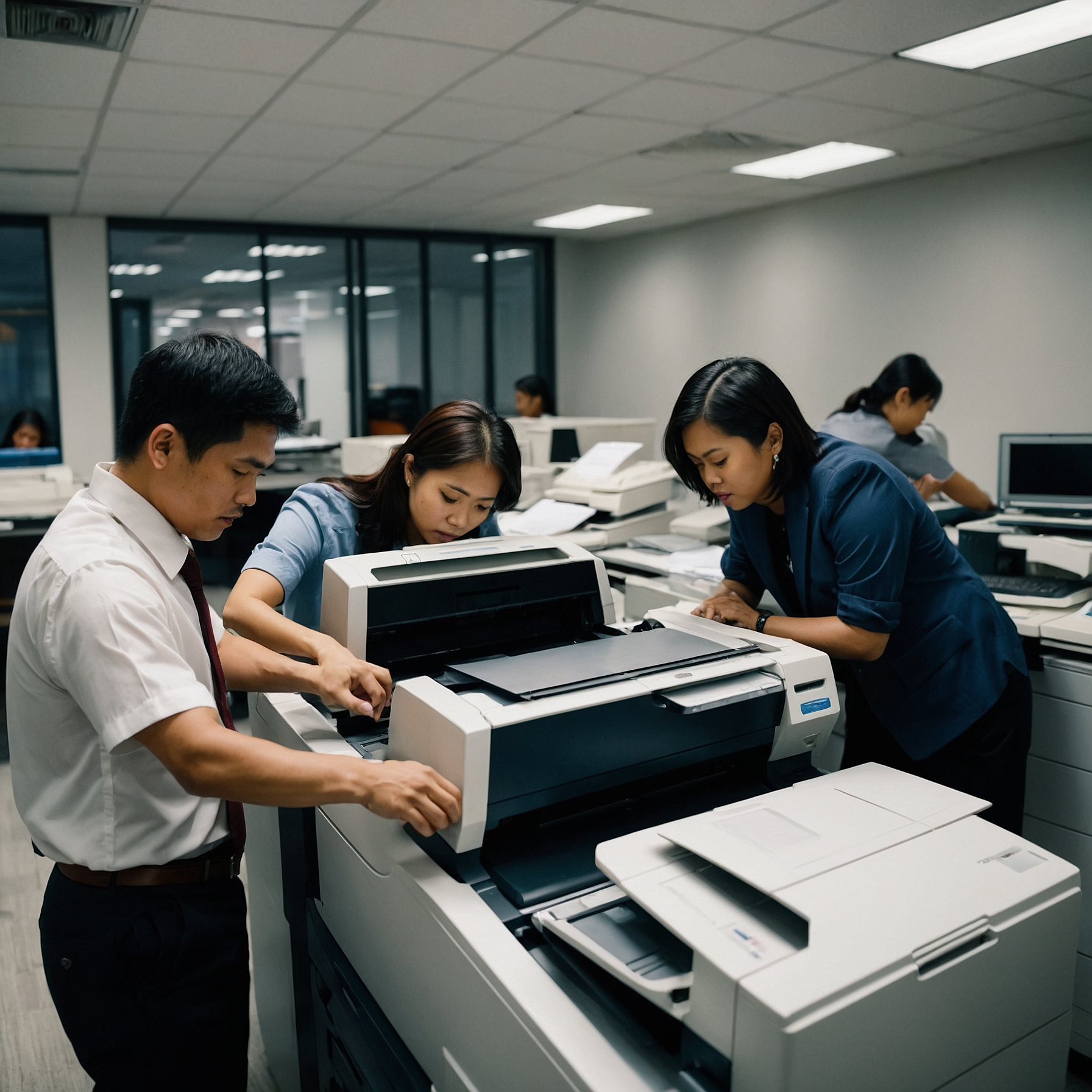
When making decisions for your business, few choices carry as much long-term financial impact as whether to rent or purchase office equipment like printers, copiers, or even laptops. The decision affects not only your budget but also your cash flow, flexibility, and long-term operational strategy. This is why understanding the core of financial planning: rental vs. purchase is critical to your business success.
In this blog post, we’ll break down the financial implications of renting versus purchasing, share real-world use cases, and help you decide which option aligns better with your business goals.
What Is the Difference Between Renting and Purchasing?
Purchasing means your business owns the equipment outright. You make a large upfront investment and gain full control over the asset.
Renting, on the other hand, allows you to use the equipment for a set period by paying a fixed monthly fee, without owning it.
While both options have their benefits, the right choice depends on various factors like your budget, business size, equipment usage, and growth plans.
Financial Planning: Rental vs. Purchase — Key Considerations
1. Initial Costs and Cash Flow
If your business is just starting or managing tight cash flow, renting equipment is often the smarter move.
Rental requires little to no upfront cost. You preserve capital and improve liquidity.
Purchase, however, involves a large initial investment that may strain your budget.
For companies that need to scale quickly or adapt to market changes, preserving cash is a crucial advantage. Learn more about the convenience of rental vs. purchase to see why rentals are gaining popularity among startups and SMEs.
2. Ownership and Depreciation
When you buy equipment, you become its owner—but with ownership comes depreciation.
A purchased printer, for example, may lose up to 50% of its value in just two years.
Rental avoids depreciation altogether. You simply return or upgrade the equipment at the end of the lease.
This flexibility is one of the main financial perks of renting, especially in industries where technology changes quickly.
3. Maintenance and Repairs
Another important aspect of financial planning: rental vs. purchase is the cost of upkeep.
Rentals typically include maintenance and support. This reduces downtime and avoids unexpected repair bills.
Purchased equipment becomes your responsibility—repairs, part replacements, and technician fees add up over time.
If you want predictable costs and less stress over technical issues, rental is the safer bet.
4. Tax Implications
Both options can offer tax benefits, but in different ways.
Rental payments are often fully deductible as operational expenses.
Purchases can be depreciated over time, which spreads the deduction across several years.
Depending on your business type, one option may give you a better tax advantage. It’s best to consult your accountant or financial advisor for personalized guidance.
5. Scalability and Flexibility
In today’s fast-moving business world, agility matters.
Renting allows you to scale up or down quickly. Need more printers for a temporary project? Add them to your rental plan.
Purchasing locks you in—you own what you buy, even if your needs change.
Explore some real-world case studies on rental vs. purchase to see how businesses are adapting through flexible rental strategies.
Industry Insights and Market Trends
According to recent studies, more companies are shifting toward Equipment-as-a-Service (EaaS) models, especially in the copier and printer rental industry. Renting is no longer seen as a stopgap but as a strategic move that offers financial and operational advantages.
Read about the latest market trends for rental vs. purchase to understand how this shift is transforming business operations across industries.
When Is It Better to Rent?
You should consider renting if:
You want to avoid large capital expenditures
You need flexibility for short-term projects or growing teams
You prefer a fully supported solution (including maintenance)
Your industry evolves rapidly and requires frequent tech upgrades
When Is It Better to Buy?
You may prefer to purchase if:
You plan to use the equipment for 5+ years
You want to build equity in your assets
You’re confident your business needs won’t change
You have internal IT support to handle maintenance
Summary: Which One Is Right for You?
| Factor | Rent | Purchase |
|---|---|---|
| Upfront Cost | Low | High |
| Long-Term Cost | Medium | Low (if used long-term) |
| Maintenance | Included | Your responsibility |
| Flexibility | High | Low |
| Tax Deductions | Operational Expense | Depreciation |
| Equipment Updates | Easy | Costly |
Final Thoughts: Aligning Financial Planning with Business Strategy
There’s no one-size-fits-all answer in the financial planning: rental vs. purchase debate. Your decision should align with your cash flow, goals, and growth timeline. It’s not just about cost—it’s about financial strategy.
If you want expert help planning your equipment expenses, check out our financial planning guide on rental vs. purchase for more insights.
Ready to Decide?
Start by evaluating your current needs, expected growth, and available capital. Whether you choose to rent or purchase, the key is to make a decision that supports your business both today and tomorrow.
For more practical tools and advice, visit our resources on: