
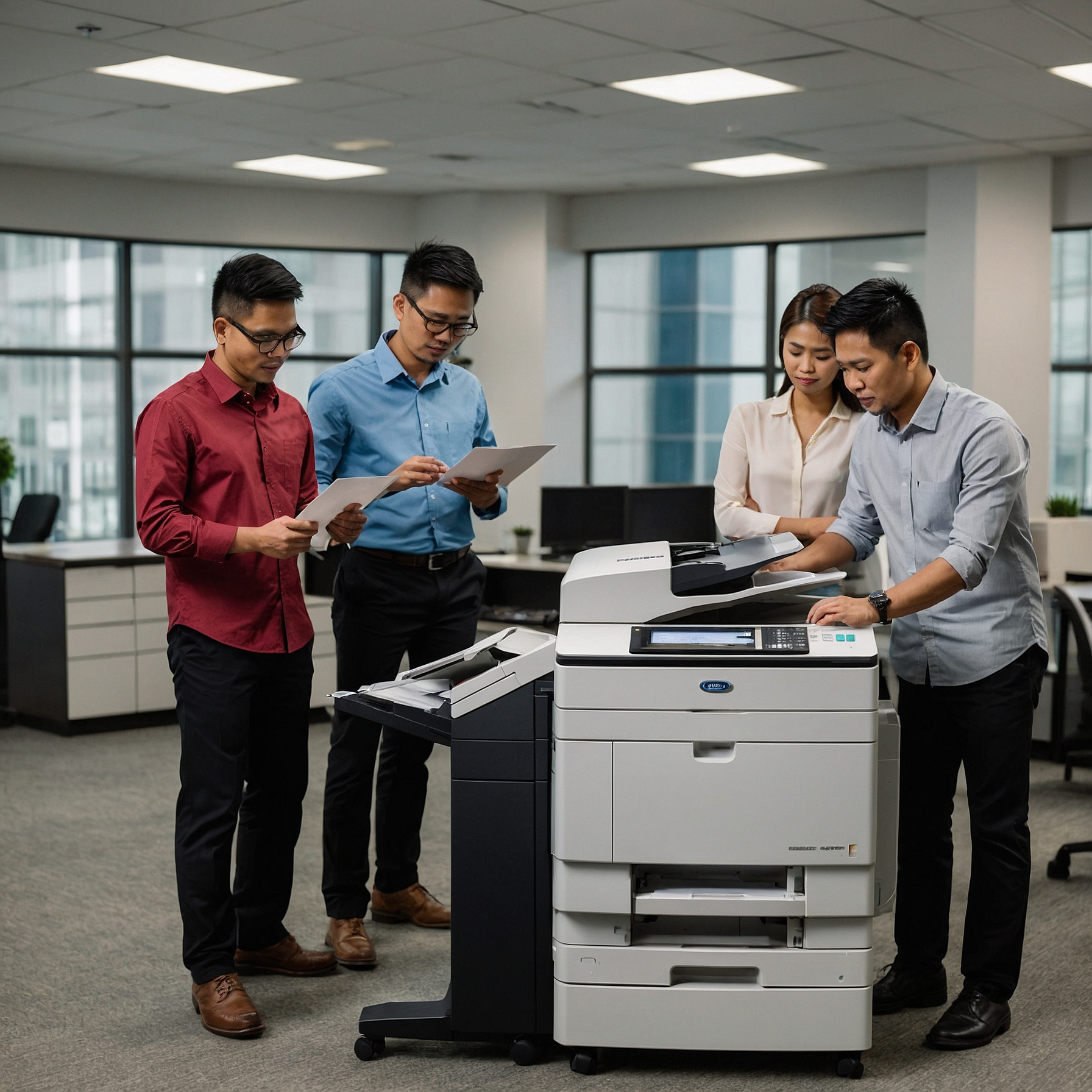
When setting up or upgrading your office equipment, one of the key decisions you’ll face is choosing between Digital vs. Analog Copiers. While both types of machines serve the basic function of reproducing documents, they differ significantly in terms of features, functionality, cost-efficiency, and suitability for modern business needs.
In this post, we’ll break down the essential differences between digital and analog copiers, explore their pros and cons, and help you determine which one fits best for your business—whether you're a startup, a growing SME, or an established enterprise.
What’s the Difference Between Digital and Analog Copiers?
Analog Copiers
Analog copiers are traditional machines that reproduce images using mirrors, light, and lenses. They operate purely mechanically, which makes them relatively simple and reliable for basic copying tasks. However, they don’t offer much beyond standard black-and-white duplication.
Digital Copiers
Digital copiers scan the document and convert it into digital data before printing. This process opens the door to a wide range of additional features like scanning, email integration, cloud storage, duplex printing, and mobile access. Many digital copiers today are also multifunction printers (MFPs).
Pros and Cons of Each Type
✅ Advantages of Analog Copiers:
Lower initial cost
Simple to operate
Fewer technical issues from software or connectivity
❌ Disadvantages of Analog Copiers:
Limited functionality (no scanning or emailing)
Lower print quality, especially for images
No network or wireless integration
Becoming obsolete and harder to maintain
✅ Advantages of Digital Copiers:
All-in-one features: print, scan, copy, fax
Higher image quality and resolution
Easy integration with networks and cloud storage
More energy-efficient and eco-friendly options
Remote diagnostics and software updates
❌ Disadvantages of Digital Copiers:
Higher upfront investment
May require basic training for full use
Training Needs: Digital vs. Analog Copiers
Analog copiers are very straightforward and require little to no user training. You press a few buttons and the copy is done. This simplicity may be appealing for small offices or teams with basic needs.
Digital copiers, however, come with many more options and settings. Users may need guidance on functions like scanning to email, double-sided printing, secure printing, and connecting to cloud platforms.
👉 Read more about Training Needs for Digital vs. Analog Copiers
That said, many modern digital copiers have intuitive touchscreens and on-screen tutorials, making training faster and easier than ever.
Best Choice for New Businesses
Startups and new business owners often need to be extra cautious with expenses and space. Analog copiers might seem attractive due to their simplicity and lower cost. But in the long run, digital copiers provide greater flexibility and scalability.
Digital machines allow small teams to:
Send documents directly to clients via email
Archive files digitally
Save time with presets and one-touch operations
👉 Explore this guide on Choosing Between Digital and Analog for New Businesses
Verdict: Digital copiers are a smarter long-term investment for growing businesses.
The Future of Copiers: Is Analog Dying?
The copier industry is clearly shifting toward digital solutions. Analog copiers are rarely produced today, and manufacturers are investing in digital advancements like:
Cloud-connected MFPs
Eco-conscious printing
AI-driven diagnostics and support
Secure document handling for remote teams
👉 Learn more about The Future of Copiers and Digital Dominance
As offices become more paperless and connected, analog copiers simply cannot keep up with evolving needs.
Real-World Comparisons: Case Studies
Still unsure what’s best for your business? Seeing how other companies have chosen and used their copiers might help.
👉 Check out Case Studies: Digital vs. Analog Copier Use to see how different industries—like healthcare, education, and law firms—are shifting to digital.
These stories show how digital machines help improve efficiency, reduce costs, and streamline communication.
Common Questions About Copier Choices
Choosing the right copier isn’t always black and white. You might be asking:
Is a digital copier worth the higher cost?
Will my team adapt quickly to new technology?
Are analog copiers still serviceable?
👉 Get clear answers from this helpful page: FAQs About Choosing Digital or Analog Copiers
Summary Table: Digital vs. Analog Copiers
| Feature | Analog Copier | Digital Copier |
|---|---|---|
| Initial Cost | Lower | Higher |
| Print Quality | Basic | High-resolution |
| Functions | Copy only | Print, Scan, Copy, Fax |
| Connectivity | None | Network, Cloud, Wi-Fi |
| Maintenance | Manual, mechanical | Auto-diagnostics, firmware |
| Suitable For | Basic tasks, tight budget | Growing businesses, remote teams |
| Future Relevance | Declining | Rising |
Final Thoughts
When comparing Digital vs. Analog Copiers, the decision comes down to your current needs and future goals. If your business only needs basic copying and operates in a low-tech environment, an analog copier could suffice—though it may become harder to support over time.
However, if your team relies on speed, flexibility, connectivity, and growth, a digital copier is the best long-term solution. It helps streamline workflows, integrate with modern tools, and keep up with your business as it evolves.
Need help choosing the right copier for your office?
Browse more guides and expert advice at Marga Copier Rental to find the solution that works best for your workflow and budget.
Tags: Digital vs. Analog Copiers, Office Copier Guide, Copier Rental, Copier Comparison
Category: Business Equipment & Office Solutions