
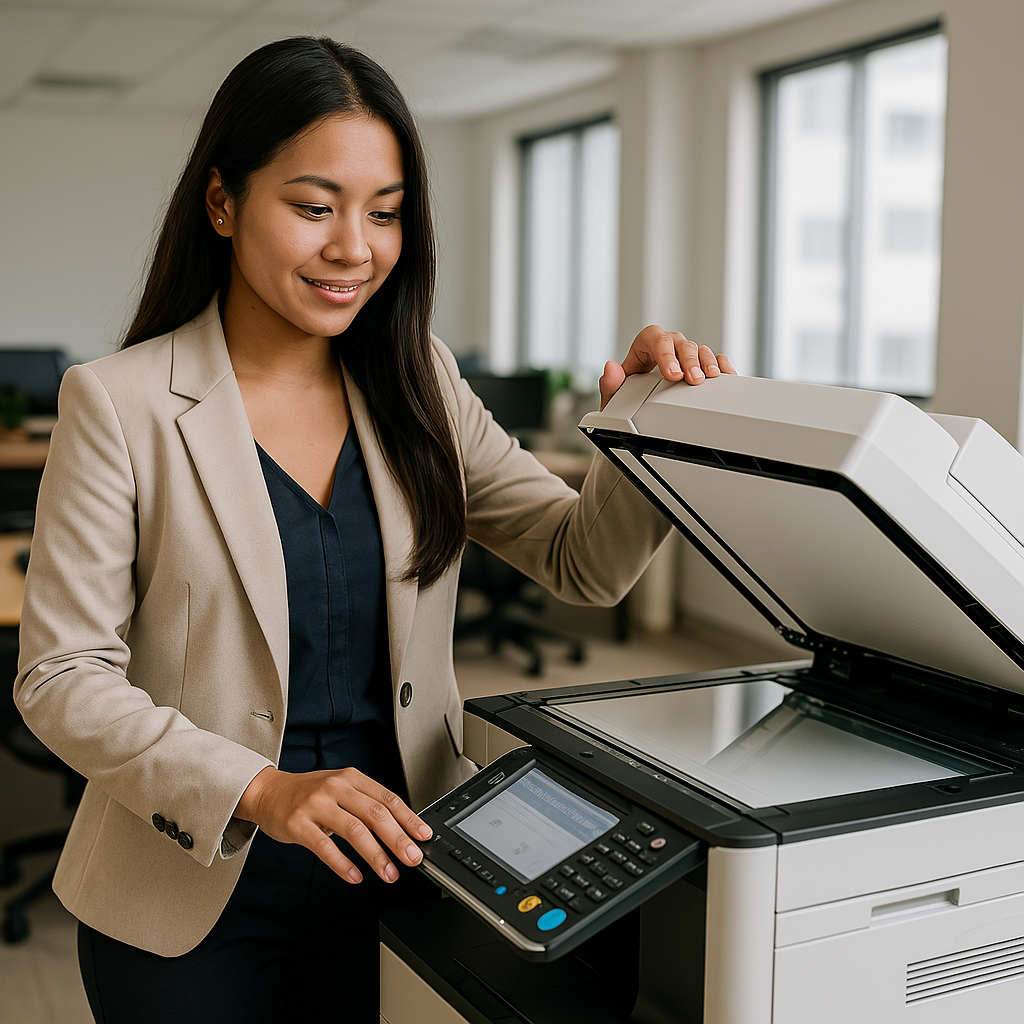
When it comes to choosing the right office equipment, the Digital vs. Analog Copiers debate is one that many businesses still face. While both serve the primary function of making copies, they differ greatly in technology, features, security, and their ability to adapt to a modern work environment.
In this post, we’ll break down the core differences between digital and analog copiers—helping you make an informed decision based on your company’s size, workflow, and future growth.
What Are Analog and Digital Copiers?
Before diving into the pros and cons, let’s start with definitions.
Analog copiers use optical technology—light, lenses, and mirrors—to reproduce images directly onto paper. They are mechanical, straightforward, and traditionally used for simple, high-volume copying.
Digital copiers, on the other hand, scan the document, convert it into digital data, and then reproduce the image. They’re multifunctional machines often equipped with scanning, faxing, wireless printing, and cloud-based integrations.
Understanding these basics sets the stage for a more detailed comparison across five essential areas.
1. Security Features
In today's data-sensitive world, document security is no longer optional—it's essential. Analog copiers don’t store data, so there’s minimal risk of information leakage. However, that also means they lack built-in protection if documents are left unattended.
Digital copiers often store recent print jobs, which poses some risks—but they also come with robust security features such as:
User authentication
Secure print release
Encrypted storage
Audit logs for compliance
👉 Explore more about Security Features in Digital vs. Analog Copiers
Verdict: Digital copiers offer stronger, configurable security—ideal for industries handling confidential information.
2. Integration with Digital Workflows
One of the major advantages of digital copiers is their ability to integrate with digital office workflows. From scanning directly to cloud storage (like Google Drive or OneDrive) to sending scanned documents via email, digital copiers are built for connectivity.
Analog copiers, in contrast, are stand-alone devices with no connection to your network, cloud, or mobile devices.
👉 Learn more about Integration with Digital Workflows
Verdict: Digital copiers are essential for modern, connected offices.
3. Durability and Longevity
Analog copiers are built with fewer electronic parts, which often makes them reliable for repetitive tasks. However, as technology moves forward, analog machines are becoming harder to maintain. Parts can be outdated and replacements costly.
Digital copiers, although more complex, benefit from regular firmware updates, automated diagnostics, and broader support from manufacturers.
👉 Explore the Durability and Longevity of Copiers
Verdict: Digital copiers offer long-term support and flexibility, especially as businesses evolve.
4. Scalability with Business Growth
As your company grows, your office equipment needs to grow with it. Analog copiers don’t scale well—they serve a single function and can't be upgraded.
Digital copiers, however, support scalability:
Add users through network access
Customize features through software
Connect with multiple departments or remote users
👉 Learn how Scalability with Business Growth is supported by digital copiers
Verdict: Digital copiers are built for expansion and future upgrades.
5. Innovations in Copier Technology
Analog technology has essentially reached its peak, while digital copiers continue to evolve. Today’s digital copiers include:
Touchscreen control panels
Mobile print from smartphones or tablets
Cloud backup and integration
Eco-friendly printing modes
Predictive maintenance alerts
These innovations not only improve efficiency but also reduce total cost of ownership over time.
👉 Check out the latest Innovations in Copier Technology
Verdict: Digital copiers continue to adapt and improve—analog cannot compete in this area.
Summary: Digital vs. Analog Copiers at a Glance
| Category | Analog Copiers | Digital Copiers |
|---|---|---|
| Security | Minimal | Advanced encryption and access control |
| Workflow Integration | Standalone only | Cloud, email, and network integration |
| Durability | Reliable but outdated | Updatable, modern support |
| Scalability | Limited | High—customizable for any business size |
| Innovation | Stagnant | Continually evolving features and tech |
Final Thoughts
Choosing between Digital vs. Analog Copiers depends on your business goals. If you’re running a small shop with basic copying needs and no interest in digital storage, an analog copier might still serve you. However, for most businesses today, digital copiers provide the features, security, and scalability needed to keep up with modern workflows.
Whether you're a startup, a growing SME, or a large enterprise—digital copiers are a future-ready investment that helps improve productivity, data protection, and document management.
Want help choosing the best copier for your business?
Visit Marga.biz to explore digital copier rental solutions tailored to your needs.
Tags: Digital vs. Analog Copiers, Office Equipment, Copier Technology Comparison
Category: Business Technology & Solutions